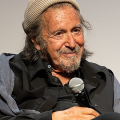
Al Pacino
Al Pacino (in Hebrew: אל פצ'ינו) American actor and filmmaker, Academy Award winner for Scent of a Woman, star of The Godfather, Scarface, and Heat.
Al Pacino (born Alfredo James Pacino on April 25, 1940, in East Harlem, New York City) is an acclaimed American actor and filmmaker, widely recognized as one of the most influential and transformative performers in modern cinema history. Raised by his mother Rose and grandparents in the South Bronx following his parents' early divorce, Pacino discovered a passion for the dramatic arts while attending the High School of Performing Arts. Although financial hardship compelled him to leave school and take various working-class jobs as a bicycle messenger, busboy, and postal clerk, he relentlessly pursued acting instruction, studying under Charlie Laughton at the Herbert Berghof Studio. In 1966, he achieved a lifelong goal by gaining admission to the prestigious Actors Studio, where he trained under the master of Method acting, Lee Strasberg, who became an essential mentor and close personal friend. Pacino soon captured the attention of theater critics on Broadway, winning a Tony Award in 1969 for Does a Tiger Wear a Necktie? before making his feature film debut in Me, Natalie (1969) and landing his first starring screen role as a desperate heroin addict in Jerry Schatzberg's gritty urban drama The Panic in Needle Park (1971).
Pacino achieved worldwide superstardom and immortalized his place in film lore when director Francis Ford Coppola fought stubbornly against studio executives to cast the relatively unknown New York stage actor as Michael Corleone in The Godfather (1972). Opposite screen legend Marlon Brando, Pacino delivered a chilling, nuanced masterclass in psychological transformation, tracing Michael's gradual corruption from a decorated college war hero into a cold, ruthless mafia patriarch. His performance earned his first Academy Award nomination and launched one of the most astounding dramatic streaks in cinema history. Over the next decade, Pacino earned consecutive Oscar nominations for starring as the incorruptible, real-life New York police whistleblower Frank Serpico in Sidney Lumet's Serpico (1973), reprising his signature role with tragic emotional depth in the Academy Award-winning masterpiece The Godfather Part II (1974) alongside co-star Robert De Niro, and playing the overwhelmed, frantic bank robber Sonny Wortzik in Lumet's celebrated true-crime docudrama Dog Day Afternoon (1975). He capped this extraordinary decade with a fourth Best Actor nomination for Norman Jewison's blistering courtroom drama ...And Justice for All (1979) and captured his second Tony Award for The Basic Training of Pavlo Hummel (1977).
During the 1980s, Pacino reshaped his cinematic persona from internal stillness into ferocious, operatic intensity, creating another indelible cultural icon in Brian De Palma's crime epic Scarface (1983). Portraying Tony Montana, a ruthless Cuban refugee who violently seizes control of the Miami cocaine underworld, Pacino delivered an electrifying, maximalist performance that transcended traditional cinema to become a global pop culture and hip-hop touchstone. Following the critical and commercial failure of the historical drama Revolution (1985), Pacino consciously stepped back from feature filmmaking for four years, choosing instead to recharge his creative spirit by returning to his theatrical roots in small New York workshops and Shakespearean stage productions. He mounted a triumphant Hollywood comeback opposite Ellen Barkin in Harold Becker's seductive neo-noir thriller Sea of Love (1989), proving that his commanding screen charisma and box-office authority remained undiminished.
The 1990s represented a period of immense artistic vitality and long-overdue formal recognition for Pacino. In 1993, he achieved the rare cinematic feat of receiving two Academy Award nominations in the same year: Best Supporting Actor for David Mamet's sharp ensemble drama Glengarry Glen Ross (1992) and Best Actor for Martin Brest's drama Scent of a Woman (1992). He won the Academy Award for Best Actor for his exhilarating, tour de force portrayal of Lieutenant Colonel Frank Slade, an embittered, blind retired Army officer whose boisterous catchphrase "Hoo-ah!" entered the global vernacular. Pacino maintained this formidable dramatic peak by reuniting with De Palma for the elegiac gangster portrait Carlito's Way (1993) and teaming with director Michael Mann in the seminal heist masterpiece Heat (1995), which featured a legendary six-minute diner confrontation opposite Robert De Niro. He continued delivering stellar work as a weary mob soldier in Mike Newell's Donnie Brasco (1997), a flamboyant incarnation of Satan in The Devil's Advocate (1997), and investigative 60 Minutes producer Lowell Bergman in Mann's corporate whistleblowing drama The Insider (1999).
Entering the 21st century as a revered elder statesman of American acting, Pacino demonstrated remarkable versatility across major motion pictures, prestige television, and classical theater. He starred opposite Robin Williams in Christopher Nolan's tense Alaskan thriller Insomnia (2002) and formed a highly decorated partnership with HBO, sweeping the Emmy Awards and Golden Globes for his uncanny portrayals of Roy Cohn in Mike Nichols's miniseries Angels in America (2003) and Dr. Jack Kevorkian in You Don't Know Jack (2010), thereby completing the prestigious Triple Crown of Acting. Pacino secured his ninth competitive Oscar nomination for his vibrant portrayal of controversial labor leader Jimmy Hoffa in Martin Scorsese's sprawling mob epic The Irishman (2019), and delighted audiences with dynamic roles in Quentin Tarantino's Once Upon a Time in Hollywood (2019) and Ridley Scott's House of Gucci (2021). Bestowed with the AFI Life Achievement Award in 2007, the National Medal of Arts in 2012, and the Kennedy Center Honors in 2016, Pacino published his candid, critically celebrated autobiography Sonny Boy in 2024, cementing an extraordinary six-decade legacy as a master of dramatic art.
Notable Films of Al Pacino: (Partial List)
- The Godfather
- The Godfather Part II
- Serpico
- Dog Day Afternoon
- Scarface
- Scent of a Woman
- Carlito's Way
- Heat
- Donnie Brasco
- The Insider
- Insomnia
- The Irishman
- Once Upon a Time in Hollywood
- House of Gucci
Notable Hollywood Co-Stars & Peers: (Partial List)
- Robert De Niro
- Jack Nicholson
- Anthony Hopkins
- Tom Hanks
- Denzel Washington
- Meryl Streep
- Morgan Freeman
- Leonardo DiCaprio
Questions & Answers About Al Pacino
Personal Details & Career Milestones - Al Pacino
| Attribute | Details | Notes |
|---|---|---|
| Date of Birth | April 25, 1940 | East Harlem, New York City, United States |
| Occupations | Actor, filmmaker, and screenwriter | Stage, film, and television |
| Years Active | 1967-present | Six decades of continuous artistic work |
| Academy Award for Best Actor | 1 win across 9 acting nominations | Won in 1993 for Scent of a Woman |
| Acting Honors | Triple Crown of Acting | Oscar, two Tony Awards, two Primetime Emmy Awards |
| Lifetime Recognitions | AFI Life Achievement Award & Kennedy Center Honors | Honored by the American Film Institute in 2007 and Kennedy Center in 2016 |
| Autobiography | Sonny Boy: A Memoir | Published internationally in October 2024 |
Main Profile for Al Pacino
-
IMDb - Official Al Pacino Filmography & Profile
Official Internet Movie Database profile featuring Al Pacino's complete filmography, awards, and career highlights.
Biographical Profiles, Reference Archives & Film Databases for Al Pacino:
-
Al Pacino - Wikipedia (EN)
Comprehensive encyclopedic entry detailing the life, filmography, stage career, awards, and cultural legacy of Al Pacino on Wikipedia. -
Al Pacino - Rotten Tomatoes
Critical consensus ratings, reviews, Tomatometer scores, and audience rankings for all feature films and television performances of Al Pacino. -
Al Pacino - Biography.com
In-depth biographical profile covering the childhood, South Bronx upbringing, Lee Strasberg mentorship, Oscar-winning roles, and life journey of Al Pacino. -
Al Pacino - Wikipedia (Hebrew)
Hebrew Wikipedia biographical entry for Al Pacino, chronicling his major film and theatrical achievements and worldwide cinematic impact.
In-Depth Articles, Career Retrospectives & Verified Interviews for Al Pacino:
-
Al Pacino on the inside story of The Godfather: ‘I was told, you’re not cutting it’ | Al Pacino | The Guardian
Al Pacino recounts the turbulent early production of The Godfather, nearly being fired by studio executives, and how director Francis Ford Coppola fought to keep him as Michael Corleone. -
Al Pacino, Robert De Niro: 'Irishman' caps decades of friendship - Los Angeles Times
In-depth feature detailing the fifty-year artistic bond and mutual respect between Al Pacino and Robert De Niro culminating in Martin Scorsese's The Irishman. -
Al Pacino | American Film Institute
Official American Film Institute tribute and career retrospective honoring Al Pacino as the 35th recipient of the prestigious AFI Life Achievement Award. -
Al Pacino reveals cut Heat scene that will change the way you watch 1995 film | The Independent
Al Pacino discusses character nuances in Michael Mann's crime classic Heat, revealing the uncredited backstory and deleted moment explaining his energetic performance. -
Al Pacino And Dan Stevens Are The Exorcists Who Inspired The Exorcist In The Ritual Trailer
Empire Magazine feature highlighting Al Pacino leading David Midell's psychological horror thriller The Ritual opposite Dan Stevens. -
Johnny Depp to Direct His First Movie in 25 Years
Variety reports on Al Pacino partnering with Johnny Depp to produce the biographical drama Modigliani, continuing his passionate work championing European art and theater. -
New Again: Al Pacino - Interview Magazine
Retrospective interview feature exploring Al Pacino's classic conversations regarding the craft of Method acting, theatrical discipline, and the transition from the South Bronx to worldwide stardom. -
Al Pacino Takes on Shakespeare in "Looking for Richard" | Fresh Air Archive: Interviews with Terry Gross
NPR Fresh Air in-depth audio interview and transcript with Terry Gross where Al Pacino details his passion project directing and starring in Looking for Richard. -
Extended interview: Al Pacino - CBS News
CBS Sunday Morning extended sit-down interview with Ben Mankiewicz exploring Al Pacino's candid reflections on his upbringing, iconic movie roles, and his memoir Sonny Boy.
For additional information, you may search for the term "Al Pacino" in external resources:
- • Google (search engine): Google.com/al_pacino
- • Bing (search engine): Bing.com/al_pacino
- • Wikipedia (encyclopdia): En.Wikipedia.org/al_pacino
Search for another phrase
Recently edited entries
1. What makes his portrayal of Michael Corleone in The Godfather so extraordinary is the quiet, internal discipline of the early scenes. While the studio initially worried he was being too passive, his restraint made Michael's calculated moral collapse into cold brutality all the more chilling and unforgettable.
2. It is worth highlighting his rare Triple Crown of Acting achievement alongside his deep stage heritage. Winning Tony Awards for Does a Tiger Wear a Necktie? and The Basic Training of Pavlo Hummel before conquering Hollywood reflects how foundational the Actors Studio and classical theater discipline remained throughout his career.
3. The electric diner conversation in Michael Mann's Heat between Pacino and Robert De Niro stands out as a genuine landmark in modern cinema. Although both giants had famously shared the billing of The Godfather Part II twenty-one years earlier, this tense six-minute sequence was the first time they ever appeared on screen together in the same shot.
4. His lifelong dedication to William Shakespeare deserves special appreciation, especially his 1996 directorial documentary Looking for Richard and his acclaimed stage and screen turn as Shylock in The Merchant of Venice. These projects reveal an artist constantly challenging himself and breaking down academic barriers around classical texts.