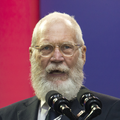
David Letterman
David Letterman (in Hebrew: דייוויד לטרמן) David Letterman - American television host, comedian, and producer, legendary host of Late Night and Late Show across 33 years.
David Letterman (born April 12, 1947, in Indianapolis, Indiana) is an iconic American television host, comedian, writer, and producer who transformed the landscape of late-night broadcasting. Raised in a middle-class family in Indiana, Letterman developed an early fascination with radio and television, enrolling at Ball State University where he worked as an announcer at the campus radio station WBST and graduated with a degree in telecommunications in 1969. He began his professional broadcasting career in Indianapolis as a radio talk show host and television weather forecaster for local station WLWI, gaining regional attention for his deadpan, irreverent on-air humor. In 1975, Letterman relocated to Los Angeles, California, to pursue stand-up comedy, performing regularly at The Comedy Store and writing jokes for television sitcoms. His sharp timing caught the eye of legendary host Johnny Carson, who invited him to perform on The Tonight Show in 1978. Letterman quickly became one of Carson's favorite and most frequent guest hosts, prompting NBC to award him his own morning program, The David Letterman Show, in 1980, which earned two Daytime Emmy Awards and laid the groundwork for his revolutionary comedy format.
In February 1982, NBC launched Late Night with David Letterman, airing in the post-midnight slot immediately following The Tonight Show from Studio 6A in Rockefeller Center. Letterman's ironic, self-referential sensibility and avant-garde absurdity completely revitalized late-night television for a younger generation of viewers. Anchored by musical director and sidekick Paul Shaffer leading the World's Most Dangerous Band, the program pioneered iconic comedy institutions including the Top Ten List, Stupid Pet Tricks, Viewer Mail, and surreal prop destruction from the roof of the studio building. Letterman also gained national fame for his unpredictable, tension-filled interactions with unconventional guests, notably performance artist Andy Kaufman, professional wrestler Jerry Lawler, actor Crispin Glover, and singer Cher. The show's distinctive anti-talk-show atmosphere, sharp cynicism, and willingness to expose the mechanics of television production earned critical adulation and established Letterman as a cultural trailblazer.
When Johnny Carson announced his retirement from The Tonight Show in 1992, NBC famously chose Jay Leno as his successor, bypassing Letterman despite Carson's private preference for his longtime protégé. Disappointed by the network's decision, Letterman entered high-stakes negotiations and accepted a historic, lucrative offer from CBS in early 1993. CBS purchased and extensively renovated the historic Ed Sullivan Theater on Broadway in New York City, providing Letterman with a grand theatrical home. Premiering in August 1993, Late Show with David Letterman ignited what the media dubbed the "Late-Night Wars," scoring immediate critical and ratings victories over NBC and receiving the prestigious Peabody Award in 1992 for reinventing the late-night genre. Throughout the 1990s, Letterman's CBS show became a cornerstone of American popular culture, attracting major political leaders, cultural luminaries, and recurring New York character guests including deli owner Rupert Jee.
Letterman's later tenure was marked by deeply human moments that expanded his connection with the American public. In January 2000, he underwent emergency quintuple heart bypass surgery, returning to the air weeks later in an emotional broadcast where he brought his medical team onto the stage in tears to thank them for saving his life. Following the September 11 terrorist attacks in 2001, Letterman became the first major late-night entertainer to return to the airwaves, delivering a raw, unscripted monologue on September 17 that offered comfort and moral resolve to a grieving nation. In April 2014, Letterman announced on-air that he would retire from broadcasting, concluding his historic run on May 20, 2015, with an acclaimed final broadcast featuring a star-studded Top Ten list with Bill Murray, Steve Martin, Jerry Seinfeld, Tina Fey, and Jimmy Fallon. Across 33 years and 6,080 episodes, Letterman became the longest-serving late-night talk show host in American television history, ultimately handing the Ed Sullivan Theater reins to Stephen Colbert.
Beyond his hosting duties, Letterman achieved immense success as a television producer through his company Worldwide Pants, which produced acclaimed network comedy programs including the Emmy-winning sitcom Everybody Loves Raymond and The Late Late Show with Craig Ferguson. In recognition of his enduring cultural contributions, Letterman was honored at the Kennedy Center Honors in 2012 and was awarded the Mark Twain Prize for American Humor at the Kennedy Center in 2017. In 2018, he returned to active broadcasting by launching the Netflix interview series My Next Guest Needs No Introduction with David Letterman, conducting profound, long-form discussions with global leaders and cultural icons such as President Barack Obama, Ukrainian President Volodymyr Zelenskyy in wartime Kyiv, media mogul Oprah Winfrey, and actor George Clooney. His signature blend of sharp wit, journalistic curiosity, and heartfelt empathy continues to influence generations of comedic broadcasters worldwide.
Signature Shows and Productions: (Partial List)
- Late Night with David Letterman
- Late Show with David Letterman
- The David Letterman Show
- My Next Guest Needs No Introduction with David Letterman
- The Tonight Show Starring Johnny Carson
- Worldwide Pants
- Everybody Loves Raymond
- The Late Late Show with Craig Ferguson
Notable Late-Night Peers and Collaborators: (Partial List)
- Jay Leno
- Conan O'Brien
- Stephen Colbert
- Jimmy Kimmel
- Jimmy Fallon
- Oprah Winfrey
- Paul Shaffer
- Bill Murray
- Johnny Carson
Questions & Answers About David Letterman
Personal Details & Broadcasting Career - David Letterman
| Attribute | Details | Notes |
|---|---|---|
| Date of Birth | April 12, 1947 | Indianapolis, Indiana, United States |
| Alma Mater | Ball State University | Bachelor of Arts in Telecommunications, 1969 |
| Broadcasting Tenure | 33 Years and 6,080 Episodes | Late-night television from 1982 to 2015 |
| Signature Programs | Late Night, Late Show, My Next Guest | NBC, CBS, and Netflix |
| Production Company | Worldwide Pants Incorporated | Producer of Everybody Loves Raymond and The Late Late Show |
| Major Cultural Honors | Kennedy Center Honors and Mark Twain Prize | Conferred in 2012 and 2017 |
| Emmy Awards | Multiple Daytime and Primetime Emmy Awards | More than 50 career nominations across writing and hosting |
Main Profile for David Letterman
-
IMDb - Official David Letterman Profile & Television Credits
Official Internet Movie Database profile featuring David Letterman's complete broadcasting credits, awards, and career milestones.
Biographical Profiles, Reference Archives & Television Databases for David Letterman:
-
David Letterman - Wikipedia (EN)
Comprehensive encyclopedic entry detailing the life, late-night career, honors, and broadcasting legacy of David Letterman on Wikipedia. -
David Letterman | Emmy Awards and Nominations | Television Academy
Official Television Academy profile documenting David Letterman's extensive history of Daytime and Primetime Emmy Awards and nominations. -
David Letterman - Biography.com
In-depth biographical profile covering the Indiana upbringing, stand-up roots, late-night broadcasting dominance, and personal life of David Letterman. -
David Letterman - Wikipedia (Hebrew)
Hebrew Wikipedia biographical entry for David Letterman, chronicling his comedy career, late-night history, and cultural influence.
In-Depth Articles, Career Retrospectives & Verified Interviews for David Letterman:
-
David Letterman retires: the top 10 list of top 10 lists about The Late Show | US television | The Guardian
The Guardian reviews the most memorable and influential Top Ten lists from David Letterman's 33 years in late-night television upon his retirement. -
David Letterman Blasts CBS on 'Late Show' Cancellation
Variety reports on David Letterman speaking out candidly on network decisions regarding late-night television programming and Stephen Colbert. -
David Letterman at 77 says retirement is both 'a myth' and 'nonsense' | CNN
CNN explores David Letterman's reflections on active creative life in his seventies, long-form interviewing, and why traditional retirement feels unnatural. -
David Letterman says goodbye after 33 hilarious years - CBS News
CBS News captures the emotion, celebrity tributes, and legacy of David Letterman's star-studded final broadcast from the Ed Sullivan Theater. -
David Letterman awarded Mark Twain Prize in star-filled celebratory roast | The Week US
The Week covers David Letterman receiving the prestigious Mark Twain Prize for American Humor during a star-studded gala at the Kennedy Center. -
Video: David Letterman announces his retirement from 'Late Show' - Los Angeles Times
The Los Angeles Times documents the surprise on-air moment in April 2014 when David Letterman announced his upcoming retirement to his studio audience. -
Letterman Communication and Media Building | Ball State University
Official Ball State University showcase of the cutting-edge media facility named in honor of distinguished alumnus David Letterman. -
David Letterman's Irreverent New Show. | Fresh Air Archive: Interviews with Terry Gross
Archival review and commentary from NPR's Fresh Air tracing the debut of David Letterman's distinctive late-night format and subversive comedy. -
How this writer got an apology from David Letterman 10 years after she called him out | CBC Radio
CBC Radio examines the candid face-to-face reconciliation between television writer Nell Scovell and David Letterman regarding late-night workplace culture. -
Former Letterman Writer: Sex Equaled Favoritism - TheWrap
TheWrap reports on the discussions surrounding Late Show workplace dynamics, diversity among comedy writing staffs, and industry reflections.
For additional information, you may search for the term "David Letterman" in external resources:
- • Google (search engine): Google.com/david_letterman
- • Bing (search engine): Bing.com/david_letterman
- • Wikipedia (encyclopdia): En.Wikipedia.org/david_letterman
Search for another phrase
Recently edited entries
1. The sheer logistical audacity of early Late Night on NBC deserves deeper focus, especially when Letterman broadcast from the first-class cabin of a Boeing 747 in mid-flight for his 1986 fourth anniversary special, showcasing how aggressively he redefined what late-night television could attempt.
2. A great detail to highlight in the production section is his relationship with the surrounding neighborhood around the Ed Sullivan Theater, particularly the recurring, unscripted appearances of nearby merchants like Rupert Jee of the Hello Deli and Mujibur and Sirajul.
3. I would expand on the emotional September 17, 2001 broadcast, which served as a national catharsis after the 9/11 attacks. His raw, unscripted opening monologue praising firefighters and police officers demonstrated his profound moral presence at the desk beyond satire.
4. His quiet commitment to higher education at Ball State University is worth noting, including establishing creative scholarships evaluated without regard to grades to give unconventional talents the same chance he received.