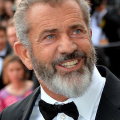
Mel Gibson
Mel Gibson (in Hebrew: מל גיבסון) American-Australian actor and filmmaker, Academy Award-winning director of Braveheart and star of the Mad Max and Lethal Weapon series.
Mel Gibson (born January 3, 1956, in Peekskill, New York) is an acclaimed American-born Australian actor, film director, and producer who ranks among the most impactful action stars and cinematic auteurs of modern Hollywood. At the age of twelve, following his family's relocation to Sydney, Gibson immersed himself in Australian life and later studied dramatic arts at the prestigious National Institute of Dramatic Art (NIDA), performing classical stage productions alongside classmates such as Judy Davis. His cinematic breakthrough arrived rapidly when visionary Australian director George Miller cast him in the raw dystopian thriller Mad Max (1979), catapulting the young performer into the vanguard of the Australian New Wave. Gibson confirmed his dramatic range by starring in Peter Weir's poignant World War I masterpiece Gallipoli (1981), winning the Australian Film Institute Award for Best Actor.
During the 1980s and 1990s, Gibson transitioned into global superstardom and established himself as one of cinema's premier box-office attractions. He reprised his signature role of Max Rockatansky in The Road Warrior (1981) and Mad Max Beyond Thunderdome (1985) alongside Tina Turner, defining the rugged anti-hero archetype of post-apocalyptic action cinema. Transitioning to mainstream American studio releases, Gibson redefined the action-comedy genre as the emotionally volatile, grief-stricken detective Martin Riggs in Richard Donner's landmark buddy cop blockbuster Lethal Weapon (1987), establishing an iconic on-screen partnership with co-star Danny Glover that spanned four massively successful feature films. Concurrently, he demonstrated versatile romantic and dramatic charisma in The Year of Living Dangerously (1982), The Bounty (1984) opposite Anthony Hopkins, Tequila Sunrise (1988), Maverick (1994), and Nancy Meyers' romantic fantasy What Women Want (2000) opposite Helen Hunt.
Seeking artistic independence from studio constraints, Gibson co-founded the independent production banner Icon Productions in 1989 alongside producer Bruce Davey. He made his directorial debut with the sensitive character drama The Man Without a Face (1993), before orchestrating the monumental medieval epic Braveheart (1995), portraying 13th-century Scottish warrior William Wallace fighting for national independence. Renowned for its visceral, large-scale battle sequences filmed with thousands of extras and zero digital infantry duplication, the film earned widespread international acclaim. At the 68th Academy Awards, Braveheart received ten nominations and won five Oscars, including Best Picture and Best Director for Gibson, placing him in an elite fraternity of actor-filmmakers to capture Hollywood's highest directorial honor.
In the early 2000s, Gibson established himself as a daring auteur filmmaker willing to finance personal cinematic visions completely outside conventional studio machinery. In 2004, he directed, co-wrote, and independently financed the biblical drama The Passion of the Christ, filming entirely on location in Italy with dialogue spoken exclusively in reconstructed Aramaic, Latin, and Hebrew. Despite industry skepticism, the project grossed over $612 million worldwide, becoming the highest-grossing independent film in cinematic history at the time. Gibson followed this achievement with the visceral pre-Columbian Mesoamerican survival epic Apocalypto (2006), set in the waning days of Maya civilization and spoken entirely in the Indigenous Yucatec Maya language. Filmed in the jungles of Mexico, the production earned widespread critical praise for its kinetic camera movement, breathless chase pacing, and immersive ethnographic atmosphere.
Following a decade marked by personal turbulence and an industry hiatus, Gibson staged an extraordinary critical and artistic comeback with the World War II biographical drama Hacksaw Ridge (2016). The film chronicled the remarkable true story of Seventh-day Adventist army medic Desmond Doss, played by Andrew Garfield, who saved 75 wounded soldiers atop the Maeda Escarpment during the Battle of Okinawa without ever carrying or firing a weapon. Hacksaw Ridge received six Academy Award nominations, including Best Director for Gibson and Best Picture, winning two Oscars and garnering standing ovations at international film festivals. In subsequent years, Gibson continued to showcase his commanding screen presence in films such as S. Craig Zahler's gritty neo-noir Dragged Across Concrete (2018) and Jodie Foster's psychological drama The Beaver (2011), while spearheading upcoming directorial projects including the anticipated biblical continuation The Resurrection of the Christ and Lethal Weapon 5.
Notable Films & Directorial Works of Mel Gibson: (Partial List)
- Braveheart
- Mad Max
- Lethal Weapon
- Hacksaw Ridge
- Apocalypto
- The Passion of the Christ
- Gallipoli
- The Road Warrior
- The Year of Living Dangerously
- The Bounty
- What Women Want
- Signs
- The Patriot
- Ransom
- The Man Without a Face
Notable Hollywood Collaborators & Co-Stars: (Partial List)
- Danny Glover
- George Miller
- Jodie Foster
- Anthony Hopkins
- Harrison Ford
- Sylvester Stallone
- Andrew Garfield
- Vince Vaughn
- Helen Hunt
- Sigourney Weaver
- Richard Donner
Questions & Answers About Mel Gibson
Personal Details & Career Milestones - Mel Gibson
| Attribute | Details | Notes |
|---|---|---|
| Date of Birth | January 3, 1956 | Peekskill, New York, United States |
| Occupations | Actor, film director, and producer | Founder of Icon Productions |
| Years Active | 1976-present | Film, television, and theater |
| Academy Awards | 2 Oscar wins | Best Director and Best Picture for Braveheart in 1996 |
| Academy Award Nominations | 3 Oscar nominations | Best Picture and Best Director for Braveheart, Best Director for Hacksaw Ridge |
| Major Film Franchises | Mad Max and Lethal Weapon | Portrayed Max Rockatansky and Martin Riggs |
| Production Company | Icon Productions | Founded in 1989 with Bruce Davey |
| Key Directorial Features | Braveheart, The Passion of the Christ, Apocalypto, Hacksaw Ridge | Recipient of Golden Globe and BAFTA Awards |
Main Profile for Mel Gibson
-
IMDb - Official Mel Gibson Filmography & Biography
Official Internet Movie Database profile featuring Mel Gibson's complete filmography, directorial works, awards, and career credits.
Biographical Profiles, Reference Archives & Film Databases for Mel Gibson:
-
Mel Gibson - Wikipedia (EN)
Comprehensive encyclopedic entry chronicling the life, acting breakthrough, directorial accomplishments, awards, and filmography of Mel Gibson on Wikipedia. -
Mel Gibson - Rotten Tomatoes
Critical consensus ratings, reviews, Tomatometer scores, and audience rankings for all movies and television projects of Mel Gibson. -
Mel Gibson - Biography.com
Biographical profile examining Mel Gibson's upbringing, rise through Australian cinema, iconic Hollywood franchises, Oscar-winning directing career, and personal milestones. -
Mel Gibson - Wikipedia (Hebrew)
Hebrew Wikipedia biographical entry detailing Mel Gibson's international acting career, historical directing work, and cultural influence. -
Mel Gibson - Walla Tags
Curated news articles, film reviews, and cultural coverage regarding Mel Gibson on the Walla media portal.
In-Depth Articles, Career Retrospectives & Verified Features for Mel Gibson:
-
Hacksaw Ridge review - Mel Gibson finds a conscience in gruesome war story | Hacksaw Ridge | The Guardian
Andrew Pulver reviews Mel Gibson's visceral World War II epic, evaluating how the film balances graphic combat intensity with Desmond Doss's uncompromising pacifist heroism. -
With the success of "Hacksaw Ridge," is it time for Hollywood to "get over" Mel Gibson's past? - Los Angeles Times
Glenn Whipp examines the critical and industry reception surrounding Mel Gibson's return to major studio directing and his Oscar-nominated trajectory. -
Mel Gibson Splits 'Passion of the Christ' Sequel Into Two Movies
Variety reports on Mel Gibson's plans to divide his anticipated biblical sequel, The Resurrection of the Christ, into two distinct cinematic chapters. -
Braveheart Review | Movie - Empire
Empire's definitive critical appraisal of Mel Gibson's epic medieval war drama, celebrating its kinetic choreography and emotional resonance. -
How A Fight With A Rugby Team Helped Get Mel Gibson Into Mad Max
/Film details how an unexpected street altercation prior to his casting call caught director George Miller's eye and led to Gibson landing the iconic role of Max Rockatansky. -
Hacksaw Ridge Review - IGN
IGN awards Mel Gibson's war biographical drama an 8 out of 10 score, highlighting Andrew Garfield's committed performance and visceral combat staging. -
Lethal Weapon 5 set to be directed by series star Mel Gibson | Radio Times
Radio Times covers Mel Gibson confirming that he will step behind the camera to direct the final chapter of the Lethal Weapon franchise in tribute to Richard Donner. -
Vince Vaughn Joins Mel Gibson's World War II Film Hacksaw Ridge
ComingSoon reports on Vince Vaughn joining the ensemble cast of Mel Gibson's World War II military drama alongside Andrew Garfield and Sam Worthington. -
Hacksaw Ridge: Why It Took a Lifetime to Make (Plus 10 Years) | Den of Geek
Den of Geek explores the lengthy decade-long production journey to bring Desmond Doss's remarkable World War II story to the silver screen under Mel Gibson's direction.
For additional information, you may search for the term "Mel Gibson" in external resources:
- • Google (search engine): Google.com/mel_gibson
- • Bing (search engine): Bing.com/mel_gibson
- • Wikipedia (encyclopdia): En.Wikipedia.org/mel_gibson
Search for another phrase
Recently edited entries
1. The physical realism and scale Gibson achieved in Braveheart without modern CGI remain awe-inspiring. Directing thousands of members of the Irish Army Reserve as extras on the plains of County Kildare while simultaneously handling the grueling physical demands of playing William Wallace set a high benchmark for modern epic filmmaking.
2. It would be worthwhile to highlight his bold creative decision to film The Passion of the Christ entirely in reconstructed historical languages, including Latin and Aramaic, and Apocalypto in Yucatec Maya. Committing to linguistic authenticity and relying on visual storytelling rather than conventional studio exposition demonstrated an extraordinary level of cinematic courage.
3. A great addition to the production notes would be his close mentorship and creative bond with director Richard Donner. Donner's belief in Gibson not only defined the tone of the Lethal Weapon series but also inspired Gibson to take on the responsibility of directing Lethal Weapon 5 as a tribute to Donner's legacy.
4. His technical staging of the Battle of Okinawa in Hacksaw Ridge deserves special mention. Utilizing practical explosives, box-rig camera rigs, and avoiding green-screen reliance captured the disorientation of combat while preserving Desmond Doss's non-violent heroism at the emotional center.